Books
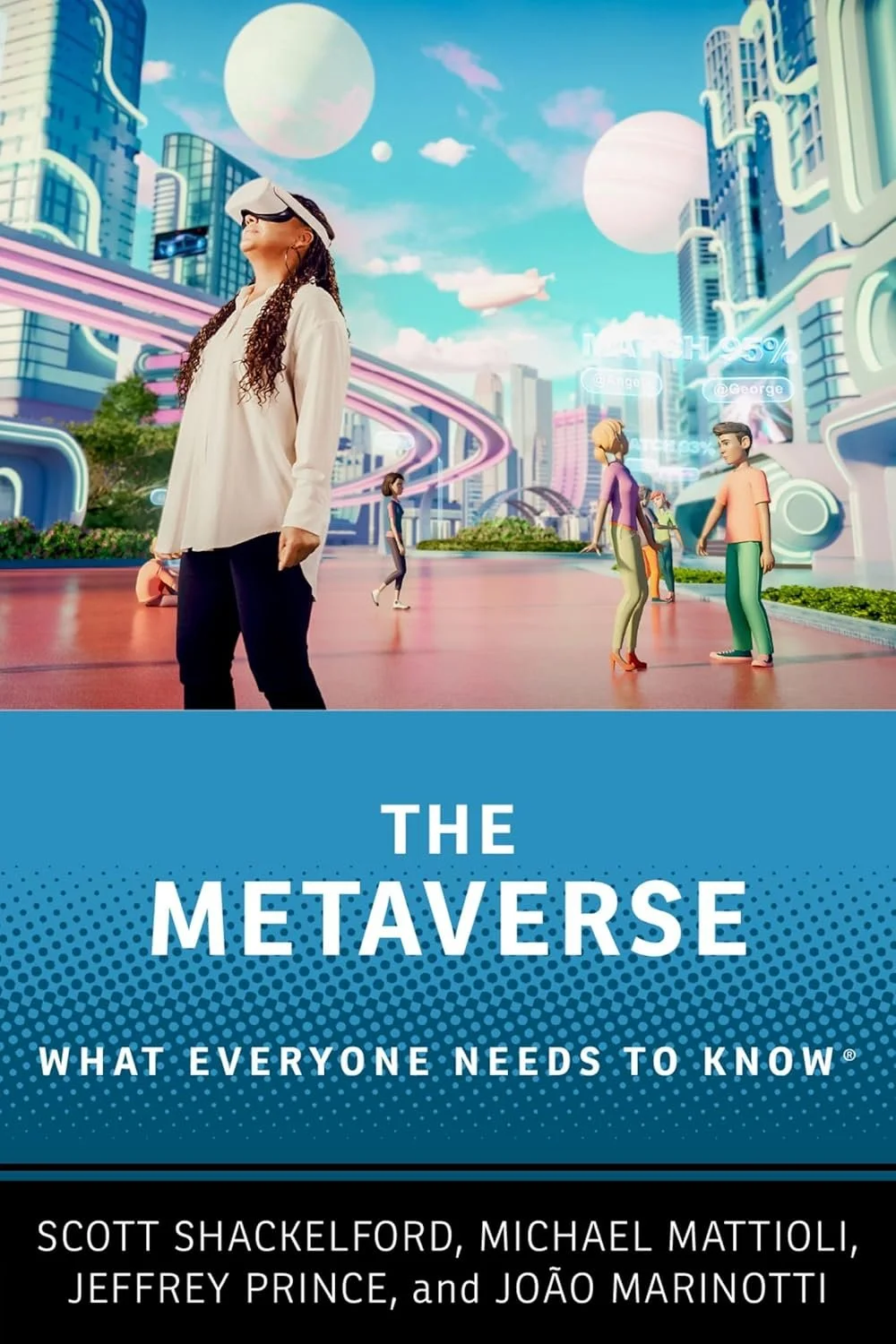
The Metaverse: What Everyone Needs to Know
The Metaverse. Depending on your perspective, it's the future of the Internet, the next generation of video games, or "a deeply uncomfortable, worse version of Zoom." In many ways, the confusion, overpromising, and hype are reminiscent of how the Internet itself was envisioned in earlier epochs.
A diverse range of firms are investing in Metaverse tech, causing a digital gold rush. There is plausibly a substantial first-mover advantage to be won, which Forbes has estimated to be north of a $1 trillion revenue opportunity. But there have also been questions raised about the utility of the Metaverse, with many firms, including Disney and Meta itself, pivoting to AI even as others like Apple release new products doubling down on spatial computing.
Available at:
Securing Democracies: Defending Against Cyber Attacks and Disinformation in the Digital Age
Securing Democracies examines the attacks on voting processes and the broader informational environment in which elections take place. The volume's global cadre of scholars and practitioners highlight the interconnections among efforts to target vulnerable democratic systems and identify ways to prevent, defend against, and mitigate their effects on both the technical and the informational aspects of cybersecurity.
The work takes a wider view of defending democracy by recognizing that both techniques—attacking infrastructure and using misinformation and disinformation—are means to undermine trust and confidence in democratic institutions. As such, the book proposes a wide range of policy responses to tackle these cyber-enabled threats focusing on the geopolitical front lines, namely Eastern Europe, the Middle East, and East Asia.
Available at:
Forks in the Digital Road: Key Decisions in the History of the Internet
Science fiction has long featured various visions of cyberspace. From the original “shared hallucination” in William Gibson’s Neuromancer, which first coined the term “cyberspace,” to the dystopian metaverse of the Matrix, authors and fans alike have been fascinated by how interconnected technologies that are being developed today will shape our collective future, for better and for worse. Less common is an urge to look back and understand how decisions made by a relatively small number of entrepreneurs, graduate students, researchers, and government officials have given us the Internet we have. But if we don’t know where we’ve been, it’s tough to understand where we are, to say nothing of where we’re headed.
This book revisits some of these key decision points in the history of cybersecurity and Internet governance, revealing the potential alternative options that existed at the time, and engages with that perennial question—what if? What if encryption had been built into the Internet’s architecture from the beginning? What if Section 230, which shields Internet platforms from civil liability, had taken a different form? What if Tim-Berners Lee had taken the advice of counsel and patented the World Wide Web? And what if the U.S. government had not helped to establish the Internet Corporation for Assigned Names and Numbers (ICANN) in 1998 or elected not to launch a new era of cyber conflict in 2006? This book answers these questions, and many more.
Available at:

Lin's Uncommon Life
Elinor (Lin) Ostrom's life was an incredible journey. Being the first woman ever to win a Nobel Prize in Economics was an achievement of a lifetime. But it was just the culmination of a life spent struggling against the odds.
Even while overcoming childhood hardships and a stutter and being denied opportunities because she was a woman, Lin never lost sight of the wonders around her and was always curious to learn more. Lin would teach generations of students the lessons she learned through a lifetime of research and dedication. As Lin said "little by little, bit by bit, family by family, so much good can be done on so many levels."
Discover Lin's Uncommon Life, and let it be an inspiration to follow your own path. Small steps, taken one at a time, can lead you somewhere truly uncommon in the end.
Available at:
Cyber Peace: Charting a Path Toward a Sustainable, Stable, and Secure Cyberspace
The international community is too often focused on responding to the latest cyber-attack instead of addressing the reality of pervasive and persistent cyber conflict. From ransomware against the city government of Baltimore to state-sponsored campaigns targeting electrical grids in Ukraine and the U.S., we seem to have relatively little bandwidth left over to ask what we can hope for in terms of 'peace' on the Internet, and how to get there.
It's also important to identify the long-term implications for such pervasive cyber insecurity across the public and private sectors, and how they can be curtailed. This edited volume analyzes the history and evolution of cyber peace and reviews recent international efforts aimed at promoting it, providing recommendations for students, practitioners and policymakers seeking an understanding of the complexity of international law and international relations involved in cyber peace.
Available at:

Cyber Peace: Charting a Path Toward a Sustainable, Stable, and Secure Cyberspace
Effective managers must accurately assess the legal and ethical ramifications of complex business transactions. This requires familiarity with the basic principles of comparative and international law, including trade, and an understanding of the importance of culturally diverse ethical traditions in all business relationships.
Legal and Ethical Aspects of International Business is your authoritative guide to the law and ethics of business leadership in the global market. It provides the vehicle for today’s and tomorrow’s managers to successfully navigate the legal and ethical environment of business around the world.
Available at:

Governing New Frontiers in the Information Age Toward Cyber Peace
Many pressing environmental and security threats now facing the international community may be traced to the frontiers. From climate change and cyber-attacks to the associated challenges of space weaponization and orbital debris mitigation, solutions to all of these issues have at their root some form of regulation over the 'global commons'. Yet governance over these spaces is now transitioning away from multilateral treaties to regional and bilateral accords.
This book makes an original contribution by comparing and contrasting some of the principal issues facing the frontiers. It analyzes how and why existing governance structures are often failing to adequately meet global collective action problems, with special coverage on cybersecurity and Internet governance. It proposes a new way forward incorporating lessons from successful regimes as well as the interdisciplinary scholarship on polycentric governance, arguing that multi-stakeholder collaboration is imperative in order to avoid tragedies of the global commons.
Available at:
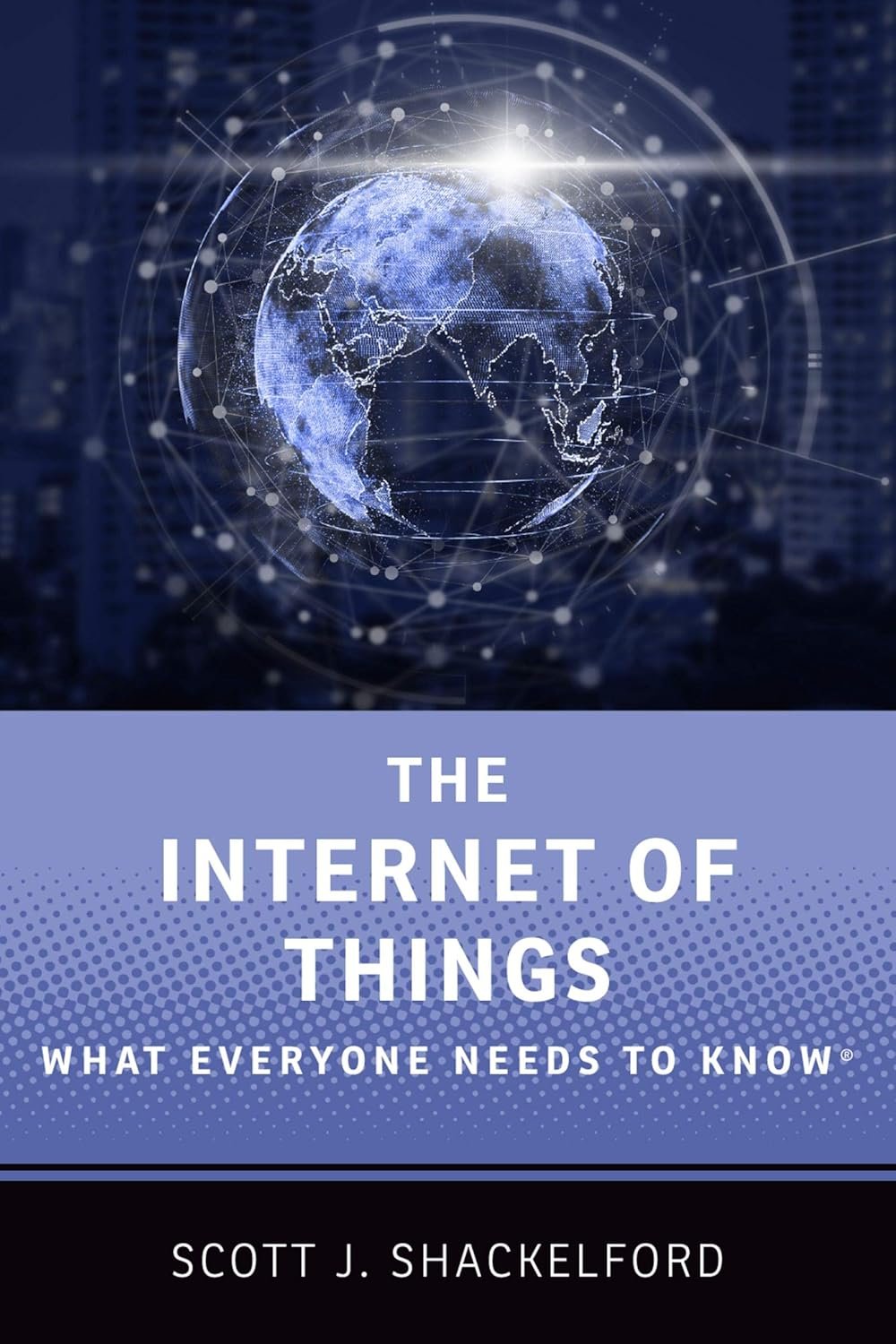
The Internet of Things: What Everyone Needs to Know
The Internet of Things (IoT) is the notion that nearly everything we use, from gym shorts to streetlights, will soon be connected to the Internet; the Internet of Everything (IoE) encompasses not just objects, but the social connections, data, and processes that the IoT makes possible. Industry and financial analysts have predicted that the number of Internet-enabled devices will increase from 11 billion to upwards of 75 billion by 2020. Regardless of the number, the end result looks to be a mind-boggling explosion in Internet connected stuff.
Yet, there has been relatively little attention paid to how we should go about regulating smart devices, and still less about how cybersecurity should be enhanced. Similarly, now that everything from refrigerators to stock exchanges can be connected to a ubiquitous Internet, how can we better safeguard privacy across networks and borders? Will security scale along with this increasingly crowded field? Or, will a combination of perverse incentives, increasing complexity, and new problems derail progress and exacerbate cyber insecurity? For all the press that such questions have received, the Internet of Everything remains a topic little understood or appreciated by the public.
Available at:
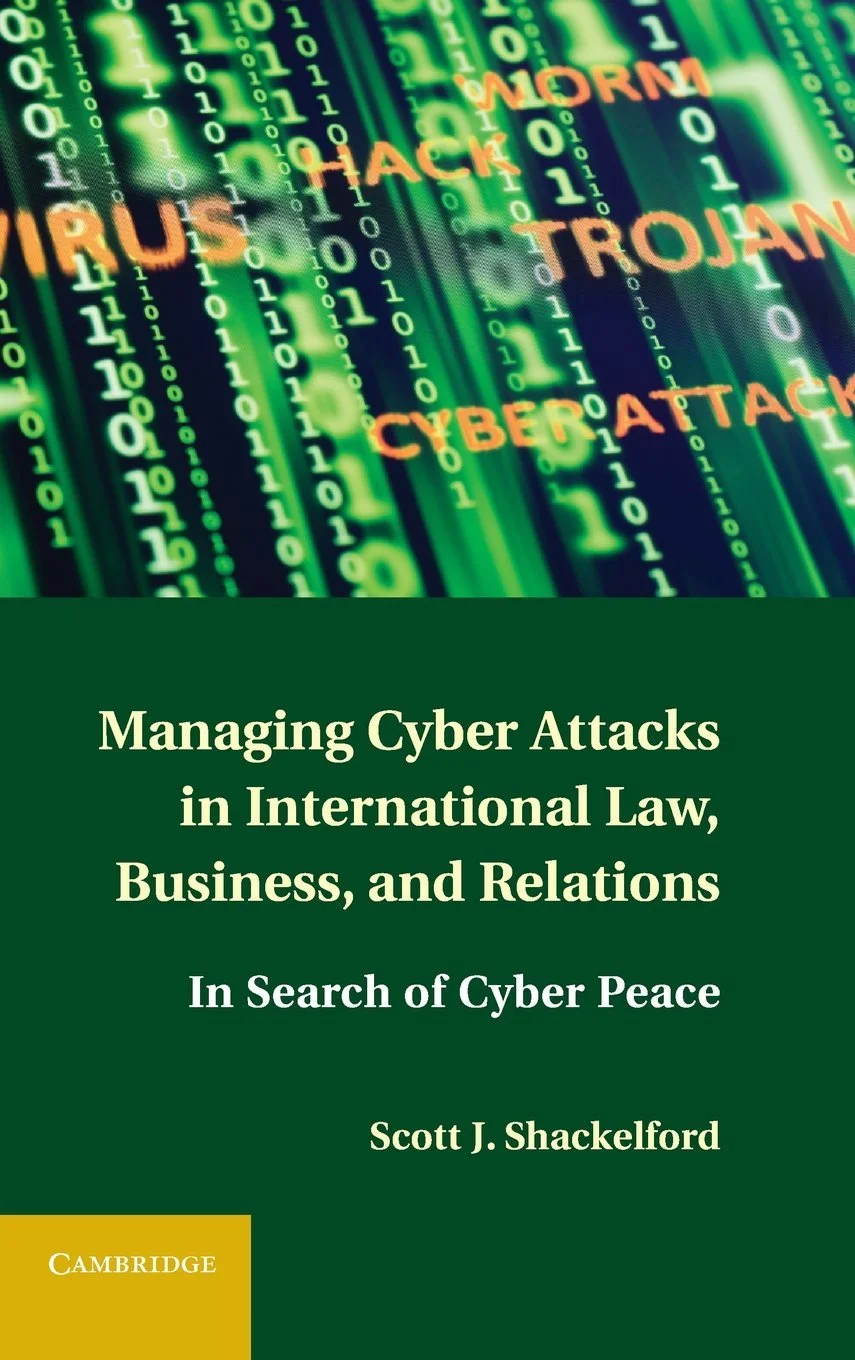
Managing Cyber Attacks in International Law, Business, and Relations: In Search of Cyber Peace
This book presents a novel framework to reconceptualize Internet governance and better manage cyber attacks. Specifically, it makes an original contribution by examining the potential of polycentric regulation to increase accountability through bottom-up action. It also provides a synthesis of the current state of cybersecurity research, bringing features of the cloak and dagger world of cyber attacks to light and comparing and contrasting the cyber threat to all relevant stakeholders.
Throughout the book, cybersecurity is treated holistically, covering outstanding issues in law, science, economics, and politics. This interdisciplinary approach is an exemplar of how strategies from different disciplines as well as the private and public sectors may cross-pollinate to enhance cybersecurity. Case studies and examples illustrate what is at stake and identify best practices. The book discusses technical issues of Internet governance and cybersecurity while presenting the material in an informal, straightforward manner. The book is designed to inform readers about the interplay of Internet governance and cybersecurity and the potential of polycentric regulation to help foster cyber peace.
Available at:
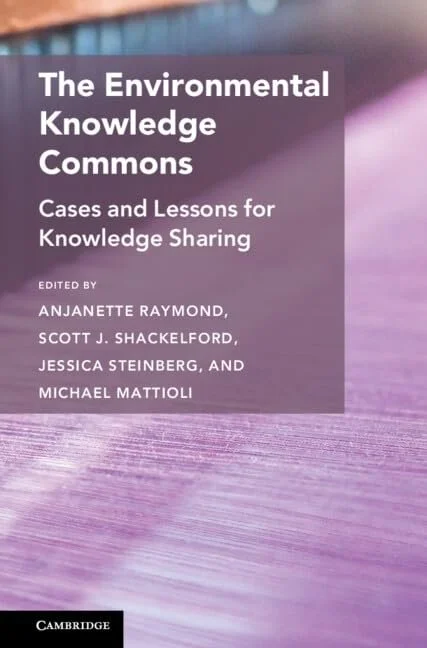
The Environmental Knowledge Commons: Cases and Lessons for Knowledge Sharing
Our natural environment constitutes a complex and dynamic global ecosystem that provides essential resources for well-being and survival. Yet the environment is also subject to unprecedented threats from human activities, such as climate change, pollution, habitat loss, biodiversity decline, and the overexploitation of natural resources.
This volume argues that such complex, multidimensional challenges demand equally complex, multi-dimensional solutions and calls for coordinated, multi-stakeholder action at all scales, including governments, civil society, the private sector, and individuals. To meet the moment effectively, such interventions require both scientific knowledge about how the environment functions and social and institutional knowledge about the actors involved in environmental governance and management. Chapters include case studies of environmental knowledge collection, management, and sharing to explore how data and knowledge sharing can inform effective, multi-stakeholder action to combat global threats to our environment. This title is also available as Open Access on Cambridge Core.
Available at: